
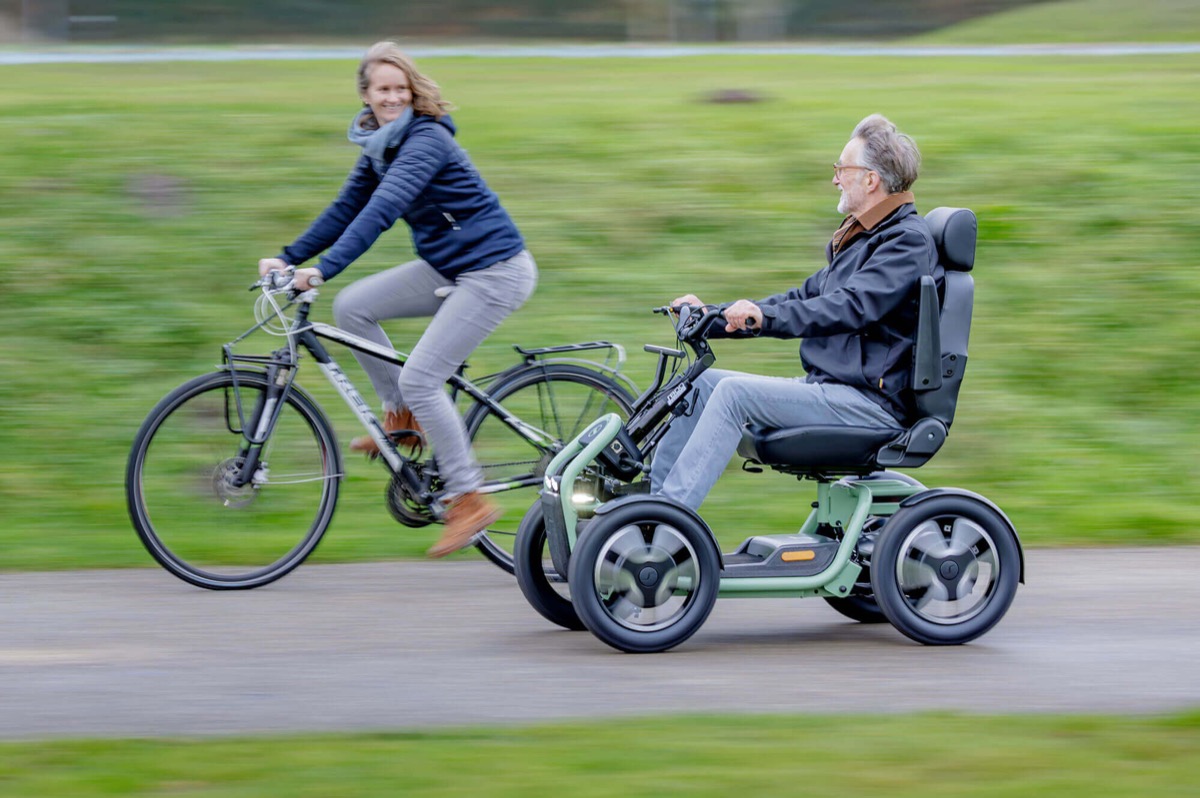
The Bellarine Peninsula is not always a simple place to navigate as you get older. The distances between townships are real. Getting from Portarlington to Ocean Grove without a car is not a casual undertaking. Footpath access can vary from street to street, with some areas relying on shared paths, road verges or incomplete pedestrian connections. Coastal paths can also change between sealed surfaces, gravel, compacted stone and sandy sections depending on the location and season. The gently undulating terrain around Drysdale and surrounding areas can also catch people by surprise.
And for someone who has spent years moving around this landscape without giving it a second thought, noticing that it has become harder can bring its own particular kind of loss.
A well-chosen mobility scooter can change the equation. It can return the morning trip to the bakery, the visit across the street, the simple act of being out in the world independently. But a scooter that does not suit the person using it, or the environment they are moving through, rarely stays in use for long.
What families across Geelong and the Bellarine are looking for in a mobility scooter has changed. The question is no longer simply what it costs. It is whether the scooter genuinely fits the terrain, the distances, the body, the daily routine. Whether the battery makes it to the shops and home again. Whether the suspension handles the gravel verge where the footpath runs out. Whether it can be carried in the car, stored in the shed, or charged from the power point in the garage.
These are the questions worth asking before you decide. They are also the questions Lime Healthcare in Drysdale asks every time.
Not all mobility scooters are the same
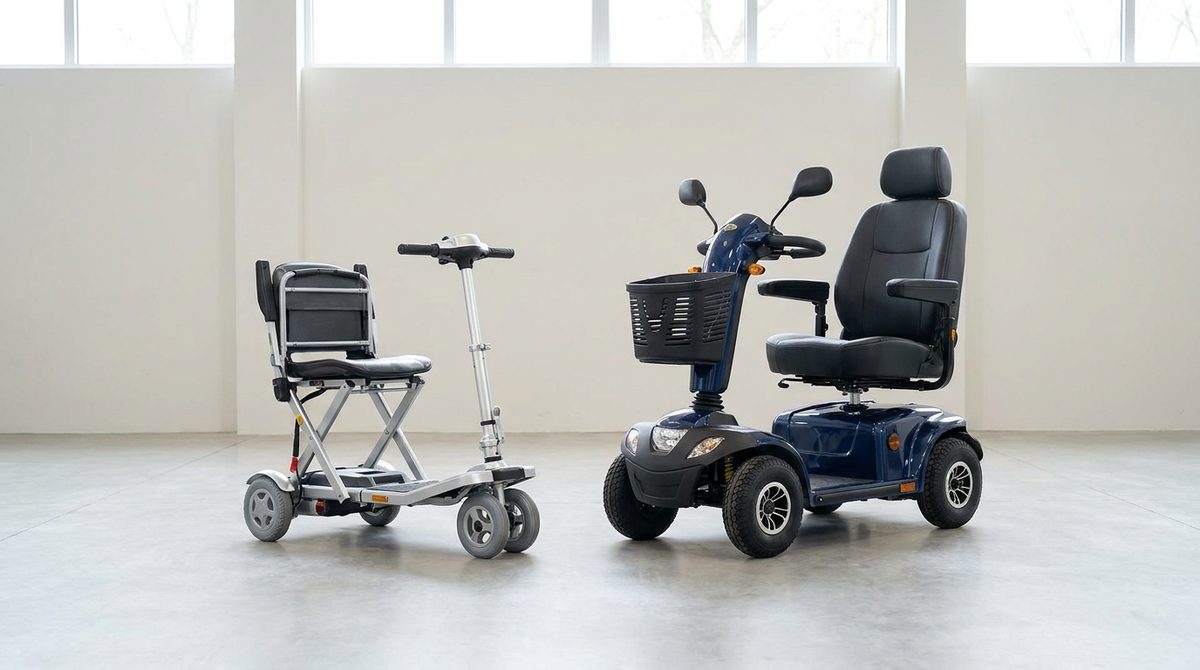
The category is wider than most people realise. There are four-wheel scooters, three-wheel scooters, compact travel models that fold into a boot, mid-range designs built for mixed ground conditions, and larger capacity models for heavier riders and longer distances. Each was built for a different set of needs, and the differences between them are not cosmetic.
A compact travel scooter can look like the obvious choice: lightweight, foldable, simple in and out of the car. In the right circumstances, it is exactly the right choice. But for someone who weighs over 115kg, needs to cover more than 12km on a single charge, or lives on a street where the scooter must manage a noticeable kerb or gutter transition, that lightweight model may not perform as expected.
Why terrain matters
On the Bellarine, those are not unusual considerations. In parts of Portarlington, St Leonards, Queenscliff and surrounding Bellarine townships, footpath access can vary from street to street, with some areas still relying on road verges, shared paths or incomplete pedestrian connections. Coastal access paths present their own surface challenges. Older township roads can also include steeper gutter transitions or uneven crossing points. A scooter that looks capable in a product listing may meet its limits at the end of the driveway.
A larger capacity model can help address some of those problems, and introduce others. It may not fit in the car. Storage and charging need to be thought through differently. It handles differently. The best scooter depends entirely on the individual, their environment and daily routine.
What a proper assessment covers
The Bellarine's geography means that the right scooter for someone in Ocean Grove, where some routes include more established shared paths and coastal connections, may be quite different from the right scooter for someone in Portarlington or St Leonards, where local crossings, verges and path continuity can be different.
In Queenscliff, heritage streetscapes, older township layouts and busy visitor areas can add their own practical considerations. In Drysdale, gradients, driveway access and everyday travel routes may shape what kind of scooter will be most comfortable and reliable.
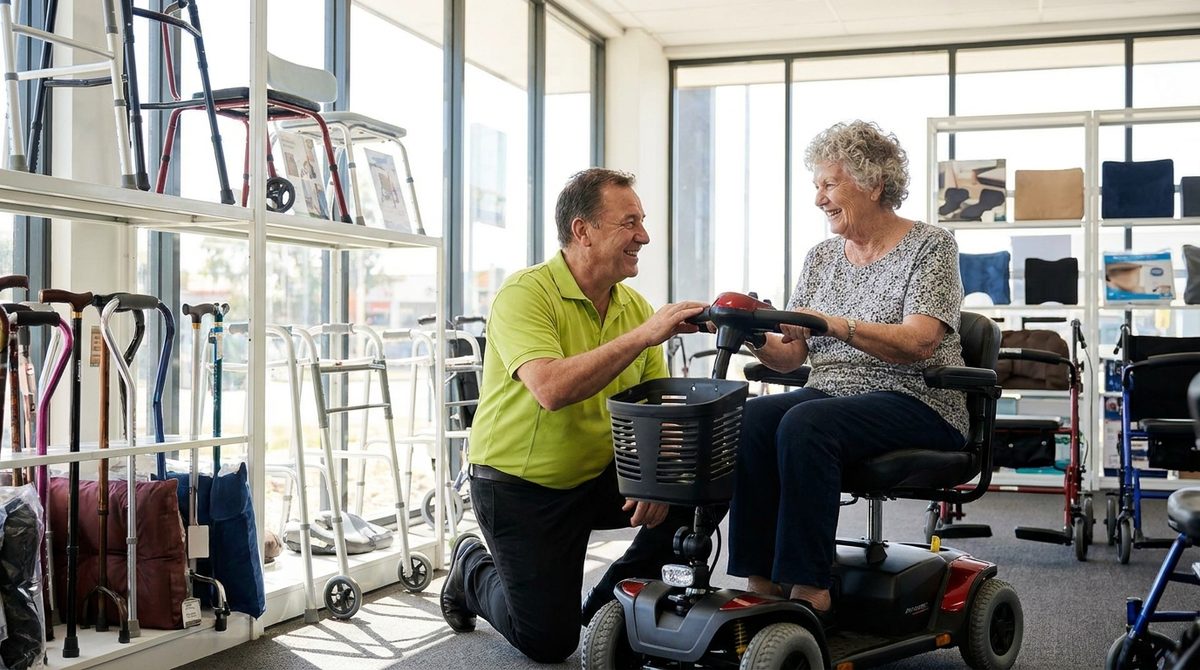
Lime Healthcare takes the time to understand what each individual actually needs, not in the abstract, but specifically. What they will use the scooter for. How far they typically travel. How they prefer to sit. How they transfer on and off. Where the scooter will be charged. Where it will live when it is not in use.
The questions that matter most are often the ones that never appear on a product page:
Key questions to ask before buying
- What is the smallest space the scooter needs to fit through?
- Where will it be kept when not in use?
- What is the kerb or gutter height at the crossing nearest to home?
- What is the steepest incline on the usual route?
- Will the scooter need to fit in a car?
- How far does it need to travel on a typical outing?
Getting clear answers to these questions before making a recommendation is what separates a proper fitting from a product sale. It is also what determines whether a scooter is still being used daily in six months, or has been quietly moved to the back of the shed.
Hiring before buying
Lime Healthcare offers scooter hire for people who want to trial a model before committing to a purchase. The value is straightforward: you can use it in real-world conditions and on your everyday routes.
On the Bellarine, that means finding out whether the scooter handles the crossing near your home, makes it to the shops and back on a single charge, and fits the way you actually live, not just the way it looks in a showroom.
Hire can also suit people who need a scooter only for a recovery period, or visitors staying on the Peninsula for a few weeks. Flexible terms mean there is no need to commit to a long-term purchase before knowing what works.
Choosing between a scooter and a powered wheelchair
The two are often treated as interchangeable. They are not.
A powered wheelchair usually offers a tighter turning circle, more precise control in confined spaces, and tends to suit people with more limited overall mobility.
A mobility scooter is generally the better fit for people with good upper body function who primarily need support for distance outdoors.
If the right direction is genuinely unclear, Lime Healthcare can assess both options in the same conversation and give a straightforward recommendation based on the person's circumstances, not simply based on what happens to be in stock.
"He is out in the garden every morning now. Before the scooter, he hadn't left the house in months."
Family of a Lime Healthcare customer from Queenscliff
What Lime Healthcare customers say
"We ordered one online first. It was too heavy for the car and too wide for the path. Lime assessed Dad properly and we ended up with something completely different, and it worked from day one."
"We hired one for six weeks while Mum was recovering. It was exactly what she needed, and we knew what we wanted to buy by the end of it."
"My parents are in Drysdale. I rang Lime from Melbourne and they helped Mum find the right option. She is on a scooter now and I do not worry about her getting to the shops anymore."
Talk to Lime Healthcare about mobility scooters
If you are working out whether a scooter is the right choice, for yourself or someone you care for, the most useful starting point is a conversation with someone who knows both the equipment and the area.
Lime Healthcare is based in Drysdale and services the Bellarine Peninsula, with delivery, setup and support available across the area. Ask the team about home visits or assessments if getting to the showroom is not straightforward.
- Compare mobility scooter options for your needs
- Trial a scooter before you purchase
- Assess home access and terrain needs
- Arrange delivery and setup
- Explore powered wheelchair alternatives
This is paid advertising content presented by Lime Healthcare. Results mentioned are based on customer feedback and are not guaranteed. Individual results will vary.
Keywords: mobility scooter Geelong, mobility scooter hire Bellarine, mobility scooter assessment Drysdale, electric scooter elderly Geelong, mobility scooter Ocean Grove, mobility aids Bellarine Peninsula.