
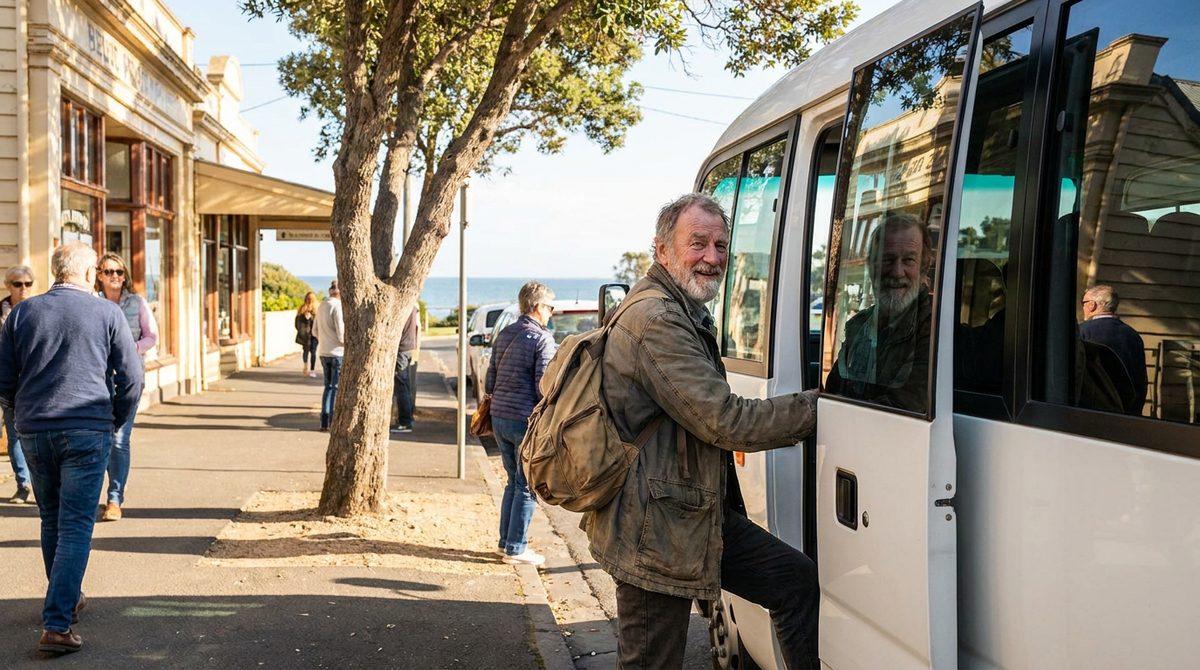
For most of us, the car has been the simple answer to getting anywhere. So when driving stops, whether all at once or bit by bit, it can feel like the world has shrunk overnight. The shops, the coffee with a friend, the appointment in Geelong. All of it suddenly feels harder to reach.
Here is the good news. Losing your licence is not the same as losing your independence. Plenty of people across Drysdale, Ocean Grove, Barwon Heads and the rest of the Peninsula get where they need to go every day without driving. It just takes knowing what is out there.
Local and regional buses
Buses are the backbone of getting around the Bellarine without a car. Routes link the main townships, including Drysdale, Clifton Springs, Portarlington, St Leonards, Ocean Grove, Barwon Heads, Point Lonsdale and Queenscliff, and connect into Geelong where the bigger hospitals, specialists and shopping centres are. They can take a little getting used to if you have not caught one in years. The trick is to plan the trip before you leave the house, not at the bus stop.
- Pick your destination first, then find the nearest stop to home.
- Write down the bus you want and the one after it, in case you miss the first.
- Note the last bus home. This is the one that catches people out.
- Allow extra time on weekends and public holidays, when services often run less often.
- If a trip needs two buses, note where you change and how long the wait is.
If timetables feel fiddly, ask a family member or a friendly face at your local library to help you map out one or two trips you make often. Once those are written on a card in your wallet, the rest gets much easier. A free travel pass is available to many older Victorians, which makes the bus an affordable way to stay mobile. Your local council or library can point you to how to apply.
"I was nervous about my first bus into Geelong. The driver could not have been more patient. Now I go in most weeks and barely think about it."
A reader from Ocean Grove
Community transport and volunteer drivers
Buses are great for regular routes, but they do not always reach every door or suit every trip. This is where community transport comes in, and it is one of the most underused services on the Peninsula. Across regional Victoria, many areas have volunteer driver programs. Local people give their time to drive others to medical appointments, the shops, social outings or visits to family. It is friendly, low cost and often door to door, which makes a real difference if walking to a bus stop is hard.
These programs are usually run or coordinated through a few familiar places:
- Your local council, which often keeps a list of transport services for older residents.
- Neighbourhood houses, which are community hubs found in many Bellarine towns.
- Community health and support organisations in the Geelong and Bellarine area.
A quick phone call to the council or your nearest neighbourhood house is the simplest way to find out what runs near you. Local services and supports can help you sort out the details. Most volunteer trips need a day or two of notice, so it pays to plan appointments with that in mind.
Taxis and rideshare for door-to-door trips
Sometimes you just want to be picked up at your front door and dropped exactly where you are going. For that, taxis and rideshare are hard to beat, especially for evenings, bad weather, or a trip with shopping bags to carry. Taxis operate across the Bellarine and into Geelong. Rideshare apps also reach many parts of the Peninsula, though pickups can take a little longer in the smaller and quieter towns.
A few simple habits make taxi trips smooth:
- Book ahead for appointments rather than hoping one is free. Mornings can be busy.
- Ask for a wheelchair accessible taxi when you book if you need one.
- Keep the booking number saved in your phone or written by the home phone.
- Book the return trip when you arrive, so a car is waiting when you finish.
Multi purpose taxi programs in Victoria can reduce fares for eligible travellers. It is worth asking your council whether you qualify, as it can make regular taxi trips far more affordable.
Mobility scooters for short local trips
If most of your trips are short and close to home, the bakery, the chemist, the foreshore or a friend down the road, a mobility scooter can be the answer. It gives you back the freedom to pop out whenever you like, without waiting on a timetable or a booking.
Scooters suit the flatter parts of towns like Ocean Grove, Drysdale and Barwon Heads well, and many people use them for the daily run to the shops or a roll along the foreshore on a fine morning. Choosing the right one matters though, because the Peninsula's kerbs, paths and distances vary a lot from street to street. If a scooter sounds like it might suit you, it is worth reading our guide to choosing a mobility scooter before you decide.
Walking, footpaths and planning around them
Plenty of Bellarine trips are short enough to walk, and a gentle walk is a lovely way to stay part of the neighbourhood. The catch is that footpaths are not the same everywhere on the Peninsula.
Some streets have smooth, continuous paths. Others rely on grassy verges, shared paths, or have gaps where the footpath stops and starts. Coastal paths change too, from sealed surfaces to gravel or compacted stone, and they can get soft or slippery after rain. A little planning keeps walking easy and safe:
- Stick to routes you know have decent footpaths and gentle slopes.
- Choose well lit, busier streets over quiet back routes if you are out near dusk.
- Carry a phone, and tell someone the route you are taking and when you expect to be back.
- If a path runs out, look for a safer crossing rather than walking along a road verge.
- On warm days, pick the cooler mornings and carry water.
If you notice a footpath problem in your area, a missing crossing or a path that needs repair, your local council takes reports from residents. Speaking up helps make the streets easier for everyone who walks them.
Giving up driving is a real change, and it is fine to feel a bit flat about it. But it is one door closing, not the whole house. Between buses, community transport, taxis, a scooter for the short trips and a good pair of walking shoes, you can keep doing the things that matter, from the morning coffee to the Probus meeting to seeing the grandkids. The first step is usually the hardest. Pick one trip you make often, work out how to do it without the car, and try it once.
We share more local tips like these in our monthly newsletter, sent free to people across the Bellarine. You might also like our piece on staying in your own home longer and our roundup of community groups on the Bellarine.